Buy vapesmarket.eu ?
We are moving the project
vapesmarket.eu .
Are you interested in purchasing the domain
vapesmarket.eu ?
domain@kv-gmbh.de · 0541-91531010
Buy vapesmarket.eu ?
Are animals dissected in class?
Yes, animals are sometimes dissected in science classes as part of the curriculum to help students learn about anatomy and biology. This hands-on approach allows students to observe and understand the internal structures of different animals. However, many schools now offer alternatives to animal dissection, such as virtual dissection software or models, to accommodate students who may be uncomfortable with or opposed to the practice. **
How is a pulsar dissected?
A pulsar is dissected by studying its electromagnetic radiation emissions across different wavelengths, such as radio, X-ray, and gamma-ray. Scientists analyze the pulsar's pulse profile, period, and dispersion measure to understand its rotation rate, magnetic field strength, and distance. By observing how these properties change over time, researchers can gain insights into the pulsar's internal structure, composition, and evolution. Additionally, studying the pulsar's surrounding environment and any companion objects can provide further clues about its formation and dynamics. **

Similar search terms for Dissected
Top-Angebote
Products related to Dissected:
-
GP Batteries GP CR123A Lithium Batteries 10-PackGP CR123A lithium batteries are now available in super value 10-pack. Ideal for people using larger quantities of batteries or engineers replacing batteries in equipment. Originally designed for cameras these GP CR123A batteries are more commonly used in alarm systems, PIR detectors, Arlo cameras, smoke detectors and LED torches. GP CR123A Lithium Batteries have an extremely long shelf life too. These CR123A size batteries are also known as various other part numbers including 123 123A CR123 DL123 DL123A CR17345. Voltage : 3V Height : 34.5mm Diameter : 16.8mm  Â11,95 £*Shipping: 2,45 £Secure redirect to the provider

-
How are corpses dissected in dentistry?
In dentistry, corpses are dissected to study the anatomy of the head and neck region, including the teeth, jaws, and surrounding structures. This process helps dental students and professionals understand the intricate details of the oral cavity and prepare them for various dental procedures. Dissection involves carefully cutting and examining the tissues and structures of the cadaver to gain a better understanding of their relationships and functions. It is a crucial part of dental education and research to enhance the knowledge and skills of dental professionals. **
-
Are cadavers dissected in physiotherapy school?
Yes, cadavers are often dissected in physiotherapy school as part of the anatomy and physiology curriculum. This hands-on experience allows students to gain a deeper understanding of the human body's structure and function, which is essential for their future practice as physiotherapists. Dissection also provides students with the opportunity to learn about the relationships between different body structures and how they relate to movement and function. It is a valuable learning experience that helps students develop a comprehensive understanding of the human body. **
-
Are animals dissected in the classroom?
Yes, animals are dissected in some classroom settings, particularly in biology and anatomy classes. Dissection is often used as a hands-on learning tool to help students understand the anatomy and physiology of different species. However, many schools and educators are moving towards alternative methods such as virtual dissection or 3D models to reduce the use of animal specimens. Some students may also have the option to opt out of participating in animal dissection for ethical or personal reasons. **
-
How are corpses dissected at the MHH in Hannover?
At the MHH in Hannover, corpses are dissected in a controlled and respectful manner. The process begins with obtaining consent from the deceased person or their next of kin. The dissection is performed by trained medical professionals in a dedicated facility, following strict ethical and legal guidelines. The goal of the dissection is to further medical knowledge and education, and the process is carried out with the utmost care and professionalism. **
Why do plants in the submerged zone often have finely dissected leaves?
Plants in the submerged zone often have finely dissected leaves because it helps them to adapt to their environment. Finely dissected leaves have a larger surface area, which allows for more efficient gas exchange and nutrient absorption from the water. This adaptation also helps to reduce the resistance of water flow, allowing the plants to thrive in the submerged environment. Additionally, the finely dissected leaves can help to minimize damage from strong water currents and reduce the risk of being uprooted. **
Why do plants in the submerged leaf zone often have finely dissected leaves?
Plants in the submerged leaf zone often have finely dissected leaves to increase their surface area for efficient absorption of nutrients and gases dissolved in the water. The finely dissected leaves also help reduce drag from water currents, allowing the plants to remain stable in their underwater environment. Additionally, the increased surface area helps in photosynthesis, as it allows for more sunlight to be captured for energy production. **
Top-Angebote
Products related to Dissected:
-
Ansmann Max-E D HR20 5000mAh Pre-Charged Rechargeable Batteries 2 PackAnsmann Max-E D HR20 5000mAh Pre-Charged Rechargeable Batteries are a superb combination of efficiency and convenience, tailored to meet the needs of both business and consumer applications. These batteries are crafted to provide reliable and enduring power for a diverse array of devices, ensuring that your electronics are consistently operational and ready for use. Product Features: Pre-Charged for Immediate Use: While these Ansmann Max-E D HR20 batteries come pre-charged, it's important to note that they do not arrive fully charged. For optimal performance, we recommend giving them a full charge before their first use when possible. High Capacity: Boasting a substantial 5000mAh capacity, these batteries are designed to offer prolonged operation times, particularly for high-drain devices like digital cameras, flashlights, and portable audio players. Economical and Eco-Friendly: These batteries can be recharged up to 1000 times, presenting a cost-effective and environmentally conscious alternative to disposable batteries. Low Self-Discharge: Featuring Max-E technology, these batteries have a significantly reduced self-discharge rate, ensuring they maintain their charge for extended periods when not in active use. Universal Compatibility: As standard D size batteries, the Ansmann Max-E D HR20 is compatible with any device that requires D batteries, offering wide-ranging adaptability across different electronic devices. In addition to these prominent features, Ansmann Max-E D HR20 batteries are distinguished by their advanced technical specifications. They maintain a consistent voltage throughout their discharge cycle, guaranteeing a steady power supply to your devices. The robust construction of these batteries ensures durability, even with regular charging and discharging cycles. Moreover, their environmentally friendly design not only saves money over time but also aids in reducing electronic waste, aligning with sustainable practices. Whether for business-related applications that demand reliable power solutions or for consumer electronics requiring dependable performance, Ansmann Max-E D HR20 5000mAh Pre-Charged Rechargeable Batteries stand as a versatile and effective choice. They offer a combination of performance, convenience, and value, making them an ideal selection for a variety of power needs.14,95 £*Shipping: 2,49 £Secure redirect to the provider
-
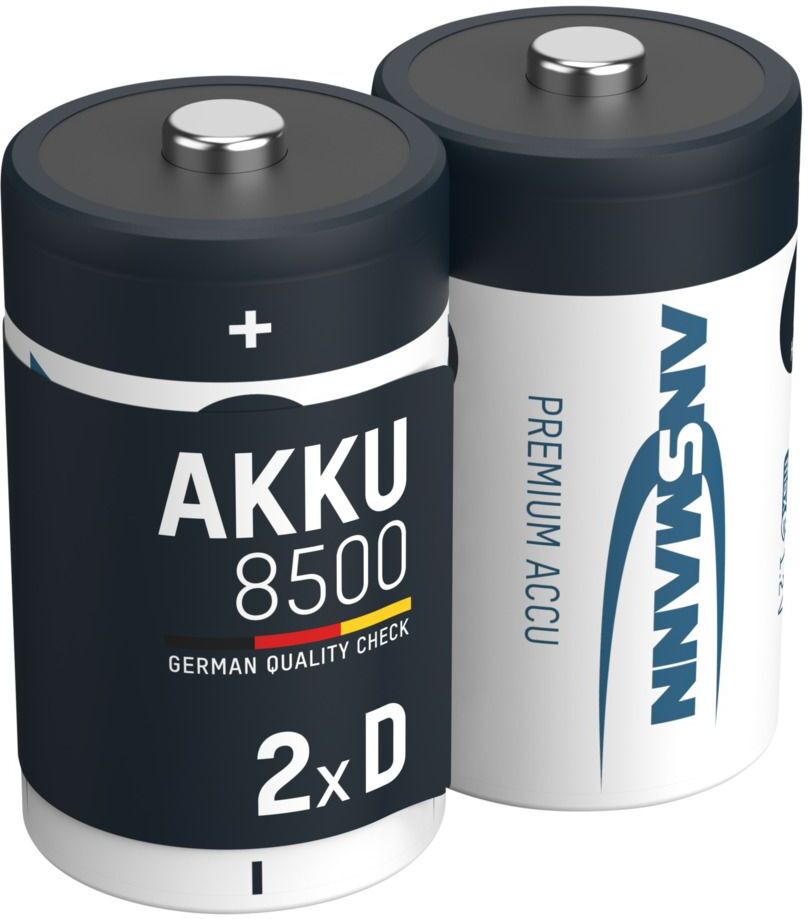
Ansmann Max-E D HR20 8500mAh Pre-Charged Rechargeable Batteries 2 PackAnsmann Max-E D HR20 8500mAh Pre-Charged Rechargeable Batteries (2 Pack) In a world where efficient and reliable power is paramount, Ansmann Max-E D HR20 8500mAh Pre-Charged Rechargeable Batteries emerge as a superior solution for both business and consumer needs. These batteries are designed to provide long-lasting power, ensuring your devices function at their best for extended periods. Perfect for high-drain devices, these batteries are a wise investment for anyone seeking performance and reliability. High Capacity: With a remarkable 8500mAh capacity, these batteries are crafted to meet the demands of power-intensive devices, providing prolonged usage and less frequent replacements. Pre-Charged Convenience: These batteries arrive pre-charged for immediate use. However, to ensure optimal performance, we recommend a full charge before first use. This practice maximizes battery life and efficiency. Compatibility Note: Due to their high capacity, these batteries require an appropriate Ansmann charger for optimal charging. Standard chargers are not compatible, underscoring the need for a specialized charging solution. Eco-Friendly Choice: Rechargeable and designed for repeated use, these batteries are an eco-conscious alternative to disposable batteries, reducing waste and environmental impact. Quality Assurance: Ansmann's reputation for quality and reliability is evident in these batteries, ensuring that they meet the highest standards for both business and consumer applications. Technical Specifications and Features: The Ansmann Max-E D HR20 batteries boast a high 8500mAh capacity, making them ideal for devices that consume a lot of power, such as professional photography equipment, flashlights, and portable audio devices. Their NiMH (Nickel-Metal Hydride) technology ensures a stable and consistent power output. Additionally, these batteries feature a low self-discharge rate, meaning they retain their charge for longer periods when not in use. It's important to note that due to their advanced technology and high capacity, these batteries require an Ansmann-specific charger. Standard chargers will not suffice, as they may not correctly or safely charge these high-capacity cells. In conclusion, the Ansmann Max-E D HR20 8500mAh Pre-Charged Rechargeable Batteries are an ideal choice for both businesses and individual consumers looking for reliable, high-performance power solutions. Their high capacity, convenience, eco-friendliness, and the requirement for a specialized charger are key factors that make these batteries a standout choice in the market.15,95 £*Shipping: 2,49 £Secure redirect to the provider
-
GP Batteries GP CR123A Lithium Batteries 10-PackGP CR123A lithium batteries are now available in super value 10-pack. Ideal for people using larger quantities of batteries or engineers replacing batteries in equipment. Originally designed for cameras these GP CR123A batteries are more commonly used in alarm systems, PIR detectors, Arlo cameras, smoke detectors and LED torches. GP CR123A Lithium Batteries have an extremely long shelf life too. These CR123A size batteries are also known as various other part numbers including 123 123A CR123 DL123 DL123A CR17345. Voltage : 3V Height : 34.5mm Diameter : 16.8mm  Â11,95 £*Shipping: 2,45 £Secure redirect to the provider
-
Are animals dissected in class?
Yes, animals are sometimes dissected in science classes as part of the curriculum to help students learn about anatomy and biology. This hands-on approach allows students to observe and understand the internal structures of different animals. However, many schools now offer alternatives to animal dissection, such as virtual dissection software or models, to accommodate students who may be uncomfortable with or opposed to the practice. **
-
How is a pulsar dissected?
A pulsar is dissected by studying its electromagnetic radiation emissions across different wavelengths, such as radio, X-ray, and gamma-ray. Scientists analyze the pulsar's pulse profile, period, and dispersion measure to understand its rotation rate, magnetic field strength, and distance. By observing how these properties change over time, researchers can gain insights into the pulsar's internal structure, composition, and evolution. Additionally, studying the pulsar's surrounding environment and any companion objects can provide further clues about its formation and dynamics. **
-
How are corpses dissected in dentistry?
In dentistry, corpses are dissected to study the anatomy of the head and neck region, including the teeth, jaws, and surrounding structures. This process helps dental students and professionals understand the intricate details of the oral cavity and prepare them for various dental procedures. Dissection involves carefully cutting and examining the tissues and structures of the cadaver to gain a better understanding of their relationships and functions. It is a crucial part of dental education and research to enhance the knowledge and skills of dental professionals. **
-
Are cadavers dissected in physiotherapy school?
Yes, cadavers are often dissected in physiotherapy school as part of the anatomy and physiology curriculum. This hands-on experience allows students to gain a deeper understanding of the human body's structure and function, which is essential for their future practice as physiotherapists. Dissection also provides students with the opportunity to learn about the relationships between different body structures and how they relate to movement and function. It is a valuable learning experience that helps students develop a comprehensive understanding of the human body. **
Similar search terms for Dissected
-
Are animals dissected in the classroom?
Yes, animals are dissected in some classroom settings, particularly in biology and anatomy classes. Dissection is often used as a hands-on learning tool to help students understand the anatomy and physiology of different species. However, many schools and educators are moving towards alternative methods such as virtual dissection or 3D models to reduce the use of animal specimens. Some students may also have the option to opt out of participating in animal dissection for ethical or personal reasons. **
-
How are corpses dissected at the MHH in Hannover?
At the MHH in Hannover, corpses are dissected in a controlled and respectful manner. The process begins with obtaining consent from the deceased person or their next of kin. The dissection is performed by trained medical professionals in a dedicated facility, following strict ethical and legal guidelines. The goal of the dissection is to further medical knowledge and education, and the process is carried out with the utmost care and professionalism. **
-
Why do plants in the submerged zone often have finely dissected leaves?
Plants in the submerged zone often have finely dissected leaves because it helps them to adapt to their environment. Finely dissected leaves have a larger surface area, which allows for more efficient gas exchange and nutrient absorption from the water. This adaptation also helps to reduce the resistance of water flow, allowing the plants to thrive in the submerged environment. Additionally, the finely dissected leaves can help to minimize damage from strong water currents and reduce the risk of being uprooted. **
-
Why do plants in the submerged leaf zone often have finely dissected leaves?
Plants in the submerged leaf zone often have finely dissected leaves to increase their surface area for efficient absorption of nutrients and gases dissolved in the water. The finely dissected leaves also help reduce drag from water currents, allowing the plants to remain stable in their underwater environment. Additionally, the increased surface area helps in photosynthesis, as it allows for more sunlight to be captured for energy production. **
* All prices are inclusive of VAT and, if applicable, plus shipping costs. The offer information is based on the details provided by the respective shop and is updated through automated processes. Real-time updates do not occur, so deviations can occur in individual cases. ** Note: Parts of this content were created by AI.